Ricoh compact digital camera

Monday, May 19, 2008

The compact camera that have digital SLR performance?

Currently, the name of the game in the compact and ultra-compact point and shoot market is cramming more megapixels onto tiny CCD sensors which only really increases noise and reduces details. Manufacturers should start realizing that there is an “in-between” market that doesn’t want a SLR camera but wants performance equivalent to one.

I’m not saying that it’s possible to get exactly digital SLR performance from any compact camera but it should be possible to come close. One that does is the Finepix F40fd and Finepix F31fd though reviews dispute the image quality between the two (with the F31fd receiving slightly worse reviews). The reason those models have good low light performance and good exposure on almost every shot is due to the use of a larger 1/1.6″ six megapixel CCD sensor that is octagonal in shape.

A larger sensor with fewer megapixels can capture more light, produce less noise and even caputure more details. But, almost every manufacturer is content to sell a digital camera with 8 or more megapixels, poor low light performance especially at high ISO settings and even unbearable shutter lags.

Some have grown wiser and have solved performance and lens issues but no compact camera on the market can compete with even the cheapest digital SLR in terms of image quality or low light performance.

Take the new Sony Cybershot W-series which features a processor borrowed from its line of Alpha digital SLRs which results in a compact shooter with excellent performance, okay lens but still terrible low light performance thanks to its tiny sensor, all models from the W-80 to W-200 are plagued with poor low light pictures and barrel distortions which may or may not bother some people. At least those models are super fast and responsive.

The lesson is, adding megapixels to cameras is a marketing ploy by almost every manufacturer, a higher megapixel count on a compact camera with a small sensor almost never generates the results of a digital SLR. Though some compacts offer high quality lenses, that doesn’t help much if it’s equipped with a tiny high-megapixel count sensor.

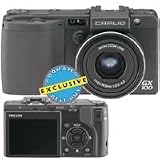
There are two models I can think of off the top of my head that the rules may not apply to, the Ricoh Caplio R7 and Ricoh Caplio GX100. Both are fast, responsive cameras with almost no shutter lag and okay low light performance though the GX100 has excess noise at ISO 400 or higher, the R6 could easily make a 4×6 print at ISO 800. The problem here is that these cameras cannot be found easily (if at all) in the US. No retailer had them and almost no online store based in the US had them, though stores in Japan, China and Hong Kong are willing to import them, for a fee.

I’m afraid that to have the best of both worlds you will still need to buy a compact shooter like the F31fd and accompany that with at least a “budget” digital SLR. If you’re just taking stills and don’t require movie modes then just pick up a digital SLR but I doubt you will want to whip that out at a party for a quick photo shoot.

Even with some of the “enthusiast” models on the market that still isn’t enough for those seeking close to digital SLR performance but as ZDnet points out most digital SLR owners already own a compact camera and a “crossover” model isn’t considered necessary. Sounds like the same people who said the same thing about a “crossover” vehicle that’s SUV like but is not quite a SUV.

Saturday, May 17, 2008

Ricoh Caplio GX100 the best compact camera for today


There is one thing Ricoh knows how to do. It sure knows how to make a compact digital that is out of the box. But I mean that in a good way. This is certainly true of the Caplio GX 100. I have been a very outspoken fan of the Ricoh GR digital, but the Caplio GX100 is another reason to just love how they design a compact digital camera.

On the surface, the Ricoh Caplio GX100 is a 10 megapixel compact with a 3x optical zoom. So far, it is not unlike many other compacts. But, as easy as it can be to use, it also allows the creative photographer lots of room to move. This is however only one feature where it stands apart from other compact digital cameras. The Caplio GX100 has been designed to produce incredibly high quality images and its design bears that out.

Apart from being incredibly sharp, the 3x optical zoom also excels in that it is the 35mm equivalent of a 24-70mm. This extra width is more practical, allowing for wonderful wide angle landscapes and dynamic, creative images. Then it can offer you portraits at the 70mm setting. More than that however, there is the optional 19mm wide conversion lens that makes the dynamics of super wide angle images possible.

The 10 megapixel resolution would be concern for many who would immediately worry about image noise. However the image processing engine in the camera seriously removes this concern. The images are sharp, colourful and perfectly exposed. The 11-element lens, as we have said, is incredibly sharp and its 7 bladed aperture means beautifully blurred backgrounds, ideal for highlighting the subject. It is this kind of design and forethought that really does set this camera apart.
The Caplio GX100 can be as easy to use as any point-and-shoot, or allow you complete control over the exposure – without having to sort through endless menus. The mode dial on top offers you the choice of Manual, Aperture Priority or Program, with Scene, My1 and M2 and movie also available. My1 and My2 allow you to quickly revert to your preferred operating and creative settings. The dial on the front of the camera allows you to quickly change aperture and the Adjust lever on the rear allows you to change shutter speeds. For low light shooting, the camera is fitted with Vibration Correction – the real thing, not some phoney preventative measure like other cameras. The camera moves the CCD to compensate for any camera movement, and let me tell you – it works brilliantly.

The GX100 has no viewfinder. Rather, it has a large, bright 2.5 inch screen. But, for those who love a viewfinder or have reason to need one, there is an optional external viewfinder available. It even accepts an external flash.

Quite simply, this is an incredibly well thought out camera, designed for the discerning photographer who wants a creative tool by his side while having the option to point and shoot at family gatherings if the need arises. It is a class act from the ground up.

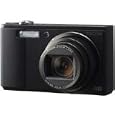
Ricoh R8 digital compact camera


The Ricoh Caplio R8 is a point-and-shoot digital camera designed for people who enjoy photography everyday.

Priced at around US$3xx the Caplio R8 boast of 7.1x optical wide-angle zoom lens (28–200 mm in 35 mm focal length) and a new high-resolution 10 megapixel CCD.

According to Ricoh, the Caplio R8 is a tool for taking photographs, given with great care not only to styling and coloring but also to its operability, portability, comfort in hand, and its solid, high-quality feel.

Key features include:

* 10 Megapixels, 1/2.3″ Type CCD ”
* Macro allows photography from 1 cm to infinity (wide), 25 cm to infinity (tele)
* 7.1x optical zoom
* Focal length F4.95 - 35.4 mm (35mm equivalent 28-200 mm)
* 64-1600 ISO (sensitivity)
* 2.7-inch Transparent Amorphous Silicon TFT LCD (460,000 pixels)
* 270 shots per battery charge
* Takes SD/SDHC, Multimedia MEDIA
* contemporary and stylish slim body
* 168 grams
* Dimensions of 102.0 mm x 58.3 mm x 26.1 mm (W x H x D)
Smooth Imaging Engine III for high sensitivity photography in any situation; AF/AE Target Selection for switching target without changing the frame.

What the manufacturer says:

The R8 offers various other enhanced capabilities for fun and easy photography, such as a large 2.7-inch, 460,000-pixel HVGA LCD and the same 1:1 aspect square format photography function that has proven extremely popular on Ricoh‘s Caplio GX100 and GR DIGITAL II models.

Our comment:

Ricoh’s successor to the recently released Caplio R7, the R8 doesn’t have that much new features which probably the reason why the price will be the same as that of its predecessor. If you haven’t bought the R7, you might as well consider buying the R8 as this digital camera has a higher pixel LCD and megapixel resolution